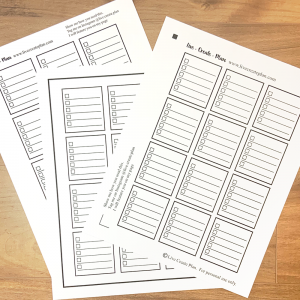
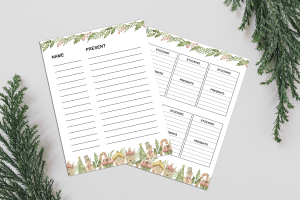
Why You Need a Daily Planning Routine (Even If You Think You Don’t)
Ever feel like your to-do list is out to get you? You start the day with the best intentions, but by lunchtime, you’re drowning in emails, forgetting appointments, and wondering if it’s too early for a nap. I’ve been there!
A few years ago, I was working from home with three projects running at once, a full inbox, and zero structure. By 2 PM I’d feel completely spent — yet somehow still behind. The turning point came when I started spending just five minutes each morning writing things down. That small habit changed everything.
A daily planning routine saved me from the chaos. It helped me stay on track, get things done, and—most importantly—feel less overwhelmed. The trick? A simple, repeatable system that works for real life. Let’s dive into five easy steps to make daily planning a habit that actually sticks!
1. The Brain Dump Method: Clear the Clutter in Your Head
Your brain isn’t designed to store a never-ending task list — it’s designed to *think*. Every task you try to “remember” quietly drains mental energy. Getting it out of your head and onto paper frees up that mental bandwidth for focus and creativity.
Before you can plan your day, you need to get all those swirling thoughts out of your brain. Enter: the brain dump. This isn’t about making a perfect list. It’s about unloading everything—tasks, reminders, random ideas—onto paper.
I remember one particularly chaotic Monday where I had 14 browser tabs open, three sticky notes on my monitor, and a mental loop of “don’t forget to call the bank.” After one brain dump session, it was all on paper — and I could finally think straight. That’s the magic of this step.

How to Brain Dump Like a Pro:
- Set a timer for five minutes.
- Write down everything on your mind (no editing!).
- Sort your list: Must-Do, Should-Do, and Would-Be-Nice-To-Do.
- Transfer only the top priorities to your planner.
Pro Tip: Use colorful planner stickers to categorize tasks. A little flair makes planning more fun!
Now that you have your list, it’s time to figure out what actually needs to get done today. Prioritizing is key to avoiding overwhelm and staying focused.
2. Prioritize Like a Boss — Not Everything is Urgent!
Without prioritization, every task feels equally urgent — and that pressure is exhausting. Deciding *in advance* what truly matters protects your time and keeps you from spending the day on low-impact busy work.
Now that you have your list, it’s time to figure out what actually needs to get done today. Prioritizing is key to avoiding overwhelm and staying focused.
True story: I once spent half a day color-coding a spreadsheet for a project that got cancelled the next morning. It looked productive but wasn’t. Since I started using the Top Three Method, I make sure the things that actually move the needle get done first — no matter what.
- Top Three Method: Choose the three most important tasks for the day.
- Time-Sensitive vs. Flexible: Highlight urgent tasks so they don’t sneak up on you.
- Delegate What You Can: Some tasked are better handled by others. Would it be a better use of your resources and time if someone else did the task?
- Ask “Is This Necessary?”: Not everything on your list needs to be done. Is this a task you want to do, or one you actually need to do?
- Use Visual Planner Layouts: Use daily spreads that help organize tasks by importance (bonus points for stickers!).
- Planner Hack: If it’s not important or urgent, move it to another day. You don’t have to do it all.
- Prevent Overwhelm: Break large tasks into smaller bites. A long task feels approachable when it’s broken into 15-minute chunks.
3. Time Blocking: Give Your Tasks a Home
A task without a time slot is just a wish. Time blocking turns intentions into actual scheduled commitments — and it helps you see realistically*what will fit in your day before you’re already exhausted and behind.
Ever plan a huge to-do list only to realize there aren’t enough hours in the day? That’s where time blocking saves the day.
I used to write 20 things on my list, then feel like a failure when I only finished six. Once I started time blocking, I realized I was only scheduling about four hours of focused work but expecting ten hours of output. Seeing it mapped out visually was a game-changer for setting realistic expectations.
Time Blocking Rules:
- Assign a time slot to each major task.
- Schedule most important tasks first.
- Include breaks (yes, lunch counts!).
- Be realistic—don’t schedule back-to-back tasks with zero breathing room.
- Bundle similar tasks together to stay in flow
- Schedule fun and downtime (your energy depends on it!).
Example Time Block:
- 8:00 AM – 9:00 AM: Answer emails and plan the day
- 9:30 AM – 11:30 AM: Deep work (projects, writing, creative tasks)
- 12:00 PM – 12:30 PM: Lunch & brain reset
- 1:00 PM – 3:00 PM: Meetings or focused tasks
- 3:30 PM – 4:30 PM: Wrap up and review
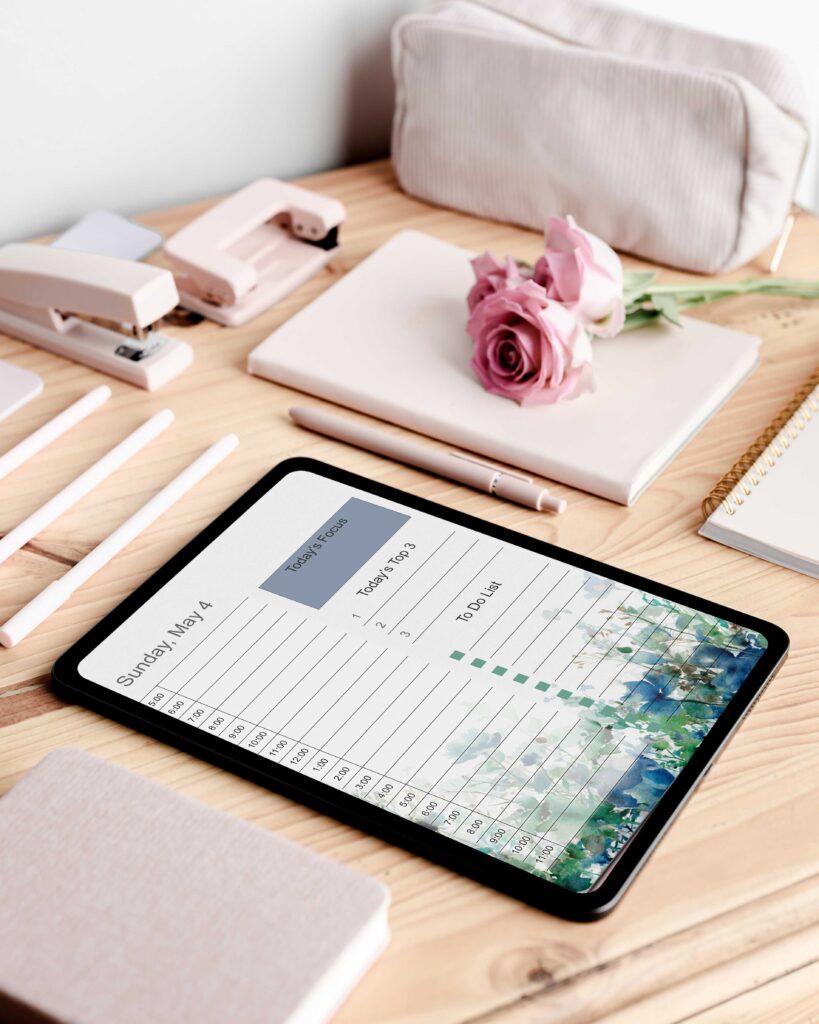
Planner Power Move: Use washi tape or highlighters to visually separate time blocks. It makes planning more fun and easy to follow!
Time Block Hack: If you have a lot of daily tasks, set a timer for 30 minutes. Silence your phone and notifications. Focus on completing the task at hand — it doesn’t need to be perfect, just done.
4. Daily Review: What Worked, What Didn’t
Planning without reflection is just guessing. The daily review turns your planner into a feedback loop — you learn your patterns, catch time drains early, and continuously improve. It’s only three questions, but it compounds over time into real self-awareness.
Planning isn’t just about writing things down — it’s about learning what works best for you. A quick review at the end of the day helps refine your system.
I started writing my daily wins in a small notebook next to my planner. Some weeks the wins are big (“launched the new post!”). Some weeks they’re small (“stayed off social media until noon”). Either way, reading them back at week’s end is surprisingly motivating — you’ve done more than you realized.
Daily Check-In Questions:
- What did I accomplish today?
- What took longer than expected?
- What can I adjust for tomorrow?
Planner Tip: Jot down one small win every day — it keeps motivation high and builds genuine confidence over time.
5. The Secret to Sticking With It: Make It a Habit
Willpower alone won’t build a planning routine — habit design will. When you attach planning to something you already do automatically (like morning coffee), it removes the need to “decide” to plan. That decision fatigue is what kills most new habits.
The best planning system in the world won’t work if you don’t use it. The key? Make it a habit, not a chore.
When I started, I told myself: “No coffee until I plan.” Within two weeks, opening my planner felt as natural as pressing the coffee button. I wasn’t relying on motivation anymore — the habit was doing the work.
Ways to Stay Consistent:

- Pair it with an existing habit (morning coffee + planning = success!).
- Set a timer each day as a reminder to plan.
- Keep your planner in sight (out of sight, out of mind!).
- Add your top three tasks to your phone’s lock screen or calendar.
- Treat your planner as a guide, not a contract. Expect the unexpected, embrace it, and pivot.
Conclusion: Start Small, Stick With It, and Watch the Magic Happen
Planning doesn’t have to be complicated — and it doesn’t have to be perfect to work. The goal isn’t a flawless color-coded schedule; it’s a reliable, flexible system that keeps you moving forward even on messy days.
Here’s what consistent daily planning can do for you:
Start with just five minutes a day. Pick one step from this post — even just the brain dump — and do it tomorrow morning. The more you do it, the more natural it becomes. And trust me — future you will thank you when your days feel less chaotic and way more productive!
Your action step for today: Grab a piece of paper and do a five-minute brain dump *right now*. Don’t wait for a perfect planner or the perfect day. Start messy. Start today.
FAQ: Common Planning Challenges (And How to Solve Them)

Categories
Recent Posts
Nothing is wrong — this is extremely common! The fix is to lower the bar. If your routine takes 20 minutes and you miss a day, it feels like a big failure. Start with a 3-minute version. Small and consistent beats elaborate and occasional every time.
That’s actually the point! Planning isn’t about predicting the future — it’s about giving yourself a starting framework to adapt from. Build buffer time into your schedule (at least 20% of your day) and treat the plan as a guide, not a rulebook.
Absolutely — in fact, many people prefer it! Evening planning lets you sleep more soundly because your brain isn’t rehearsing tomorrow’s to-dos while you try to rest. Try a quick 5-minute “tomorrow prep” before bed instead.
This is a prioritization gap, not a time gap. Pick your Top Three tasks each day — the three things that would make the day feel successful — and treat everything else as bonus. A day where your Top Three are done is a productive day, period.
Most people quit because they chose a system that was too complicated or too rigid. The secret is to find the *simplest* format that works for you, not the most beautiful one you saw on Pinterest. Try the free: Brain Dump and Daily Schedule Printable — it’s two pages, no overwhelm.
Nope! A plain notebook works perfectly. That said, the right planner *can* make the habit more enjoyable and sustainable. Check out the resource section below for tried-and-tested options at every price point.
Need a kick start? Here is a simple printable Brain Dump and Daily Schedule.
What’s Included:
You will receive both files shown in PDF form.
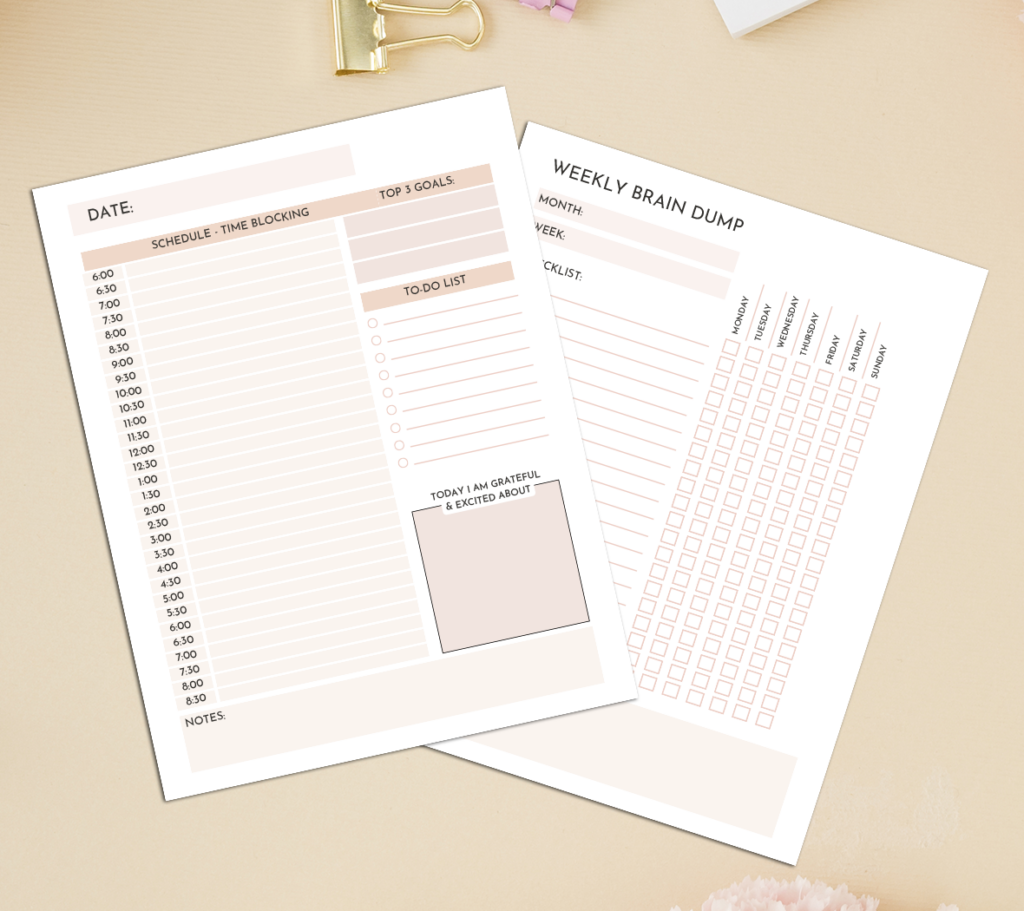
PRINTING GUIDELINES:
- Print at 100%.
- Use good quality bight white paper for best results.
RESOURCES:
 | Simple Undated Planner
|
 | Hammermill Premium 32 Lb Paper
|
 | Plum Paper Planner
|
 | Erin Condren Daily Life Planner Duo
|
| **** above are affiliate Amazon links where I get a small percentage of the sale. Your price for the item will be the same and not increase. |