Christmas Gift giving Planning: How to Get Organized (Even If You’re Already Behind)
Let me be honest with you — I totally dropped the ball this year.
I had every intention of starting my Christmas shopping in October. I had a list in my head, a vague budget, and the confidence of someone who has definitely not panic-bought everything on December 22nd before. Reader, I panic-bought everything on December 22nd.
Sound familiar? The holidays are hectic for almost everyone. Between family schedules, work deadlines, and the general chaos of Q4, gift planning can fall through the cracks fast. So I did what I always do when things feel out of control: I made a plan.
If you’re catching up on Christmas prep — or want to set yourself up better for next year — this post is for you. You’ll get a full walkthrough of the strategies that actually help, a brain dump method adapted specifically for holiday planning, and a free printable Christmas gift list to keep it all in one place.
The good news: The same daily planning habits that keep your regular weeks running smoothly? They work beautifully for holiday prep. This is just planning with tinsel on top.
Let’s break it down step by step
Step 1: Do a Holiday Brain Dump First
Before you can plan “what” to buy or “when” to shop, you need to get everything out of your head and onto paper. Holiday planning involves more mental moving parts than a typical task list — gifts, food, events, travel, decor, cards, wrapping supplies. Trying to hold all of that in your head is exhausting and leads to things being forgotten.
A brain dump clears the mental clutter so you can actually think.
I did this at my kitchen table one Sunday in November with a cup of coffee. In five minutes I had listed 47 things I was “mentally tracking” for the holidays. No wonder I felt scattered — my brain was working overtime. Once it was all on paper, I could actually breathe and start sorting.
How To Brain Dump Your CHRISTMAS List
✏️ Planner Tip: Use a different colored pen or highlighter for holiday planning so it visually stands out from your regular weekly spread.
🎄 Daily Planning Connection: This is exactly the same brain dump method from the 5-Step Daily Planning Routine — just applied to the holidays. Once you get comfortable with brain dumping your day, it becomes second nature to use the same tool for bigger seasonal projects.
Step 2: Set Your Budget Before You Shop
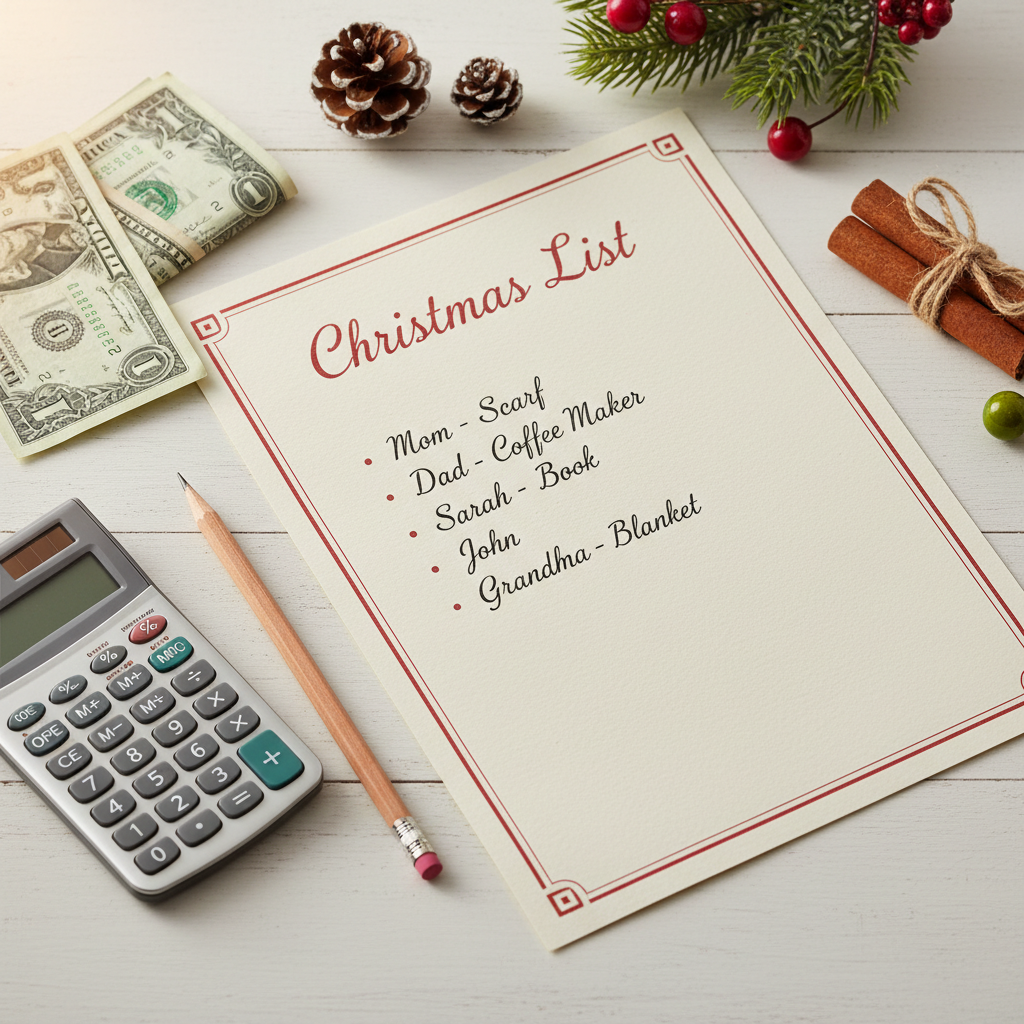
Budget creep is the #1 reason the holidays feel financially stressful well into January. The problem usually isn’t generosity — it’s the absence of a clear number *before* you start browsing. Once you’re holding a gift in your hands (physical or digital), it’s very hard to put it back.
Setting a budget per person *before* you open a single browser tab or walk into a single store is one of the most protective things you can do for your January self.
One year I set a “soft” budget of $50 per person and ended up averaging $78 because I kept finding “just one more little thing.” The following year I wrote the budget amounts in pen in my planner, treated them like fixed limits, and stayed within budget for the first time in years. The pen made it feel real.
How to Budget for Christmas Gifts:
💰 Budget Hack: Apps like YNAB, Copilot, or even a simple Notes file on your phone make it easy to track holiday spending in real time as you shop.
💡Mindset Shift:** A budget isn’t about being cheap — it’s about being intentional. A thoughtful $30 gift chosen with care beats a rushed $75 gift chosen under stress every single time.
🎄 Daily Planning Connection: Budgeting for gifts uses the same prioritization thinking from your daily planning routine — deciding in advance what matters, what’s essential, and what can be skipped or simplified. The discipline carries over directly.
Step 3: Shop Smart — Timing and Strategy
Spreading your shopping over several months does two things: it distributes the financial impact so no single paycheck takes a hit, and it removes the time pressure that leads to panic-buying whatever’s left on the shelf. Early shoppers get better selection, better prices, and a lot less stress.
My personal rule now: any gift that needs to be shipped gets ordered by December 10th, no exceptions. I learned this the hard way after a “guaranteed by December 24th” delivery arrived December 27th — twice.
Smart Shopping Tips:
- Start in September or October — yes, really. Even buying one or two gifts a month makes December feel manageable.
- Shop online early — shipping delays are real, especially in the final two weeks of December. Build in buffer time.
- Consider one large family gift instead of individual presents — a family experience (trip, dinner out, a subscription box) can be more memorable and more budget-friendly than six separate items.
- Gift certificates are underrated — they’re not lazy, they’re practical. A gift card to a favorite restaurant or store lets the recipient choose exactly what they want. Perfect for anyone difficult to shop for.
- Buy in bulk when it makes sense — candles, coffee, olive oil, nice hand cream, a good book: these make wonderful gifts for multiple people on your list without anyone feeling like they got a “generic” gift.
- Start or join a family gift exchange — instead of buying for every family member, each person draws one name and shops for just that one person within an agreed budget. It dramatically simplifies the list and makes gifts more thoughtful. We started this in my family a few years ago with great success. We draw names at Thanksgiving.

✏️ Planning Hack: Create a “Gift Ideas” note on your phone and add ideas throughout the year whenever someone mentions something they want or need. By the time October rolls around, your list practically writes itself.
🎄 Daily Planning Connection: Shopping in stages is time blocking applied to the holidays. You’re not trying to do it all in one December weekend — you’re distributing the work across weeks and months so no single day becomes overwhelming.
Step 4: Ways to Stay Consistent With Holiday Planning
The reason most holiday planning falls apart isn’t lack of organization — it’s lack of consistency. You make a list, feel great about it, and then don’t look at it again for three weeks. The system only works if you actually use it.
The same habit-stacking principles that make daily planning stick? They apply directly to holiday prep.
I started treating my Christmas planning the same way I treat my weekly review: every Sunday for the six weeks leading up to December 25th, I spend 10–15 minutes reviewing my gift list, checking what’s been ordered, and identifying what needs to happen next. It sounds simple because it is — and it completely eliminated my December panic spiral.
How to Stay on Track With Holiday Planning:
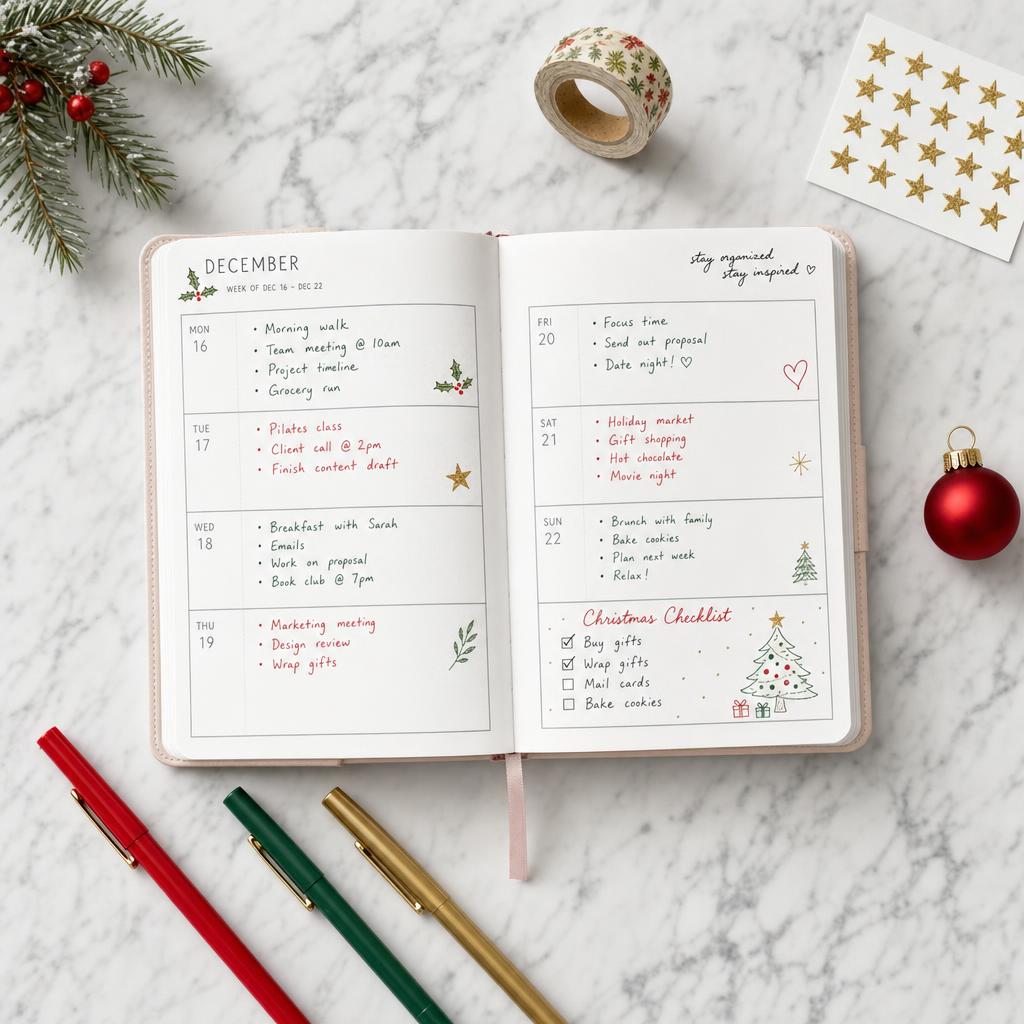
- Add a weekly “Christmas check-in” to your planner starting in October — even 10 minutes a week makes a huge difference by December.
- Keep your gift list somewhere visible — in your planner, on your fridge, or as a pinned note on your phone. Out of sight means out of mind.
- Set purchase deadlines for each gift and write them in your calendar with reminders. Treat them like real appointments.
- Batch your shopping — designate one or two specific “shopping days” per month rather than trying to squeeze it in during random spare moments.
- Use your existing planning routine as the anchor — at the end of your weekly review, spend 5 minutes on your Christmas list. Don’t add a separate habit; just extend one you already have.
- Celebrate progress — when you check off a gift, mark it with a sticker or bright highlight. Visual progress is motivating!
- Have a backup plan — for anyone on your list who’s genuinely hard to shop for, decide in advance that a gift card + handwritten note is a perfectly lovely gift. Remove the mental block early.
- Consistency Tool:** Print the [Christmas Gift List freebie](#freebie) below and clip it into your planner. Having it physically in your planner means it becomes part of your weekly review naturally.
- Tech Option: If you prefer digital, Google Sheets or Notion work great for a shared family gift tracker — especially useful if you’re co-shopping with a partner.
🎄 Daily Planning Connection:** Consistency is the secret ingredient in all planning — daily, weekly, and seasonal. The habits you build around your everyday planning routine (reviewing, adjusting, checking in) are exactly the same habits that keep your Christmas planning on track. One good system reinforces the other.

Conclusion: The Best Holiday Gift You Can Give Yourself Is a Plan
The holidays are supposed to feel magical — not stressful. And the truth is, a little planning goes a long way toward making that happen.
When you combine a holiday brain dump, a clear budget, smart shopping timing, and consistent weekly check-ins, something shifts. Instead of dreading December, you start looking forward to it. Instead of frantic last-minute shopping, you have a list, a system, and time to actually enjoy the season.

Here’s what a solid holiday planning routine gives you:
- Less financial stress — because you set a budget before you shop, not after
- More presence — because your mental “to-do loop” is on paper, not in your head
- Better gifts — because you shopped thoughtfully, not frantically
- A calmer December — because the big decisions were made in October
- A template for next year — because a plan you can repeat is worth more than a one-time scramble
👉 Your action step today: Do a 10-minute holiday brain dump right now. Grab a piece of paper, set a timer, and write down every single holiday-related thing on your mind. Then download the free printable below and transfer your gift list onto it. That’s it. You’ve started. Future December-you is already grateful.
Common Holiday Planning Challenges
A: The key is connecting holiday planning to your existing routines rather than treating it as a separate project. Add “review Christmas list” as a standing 10-minute item in your weekly planning session starting in September. Because it’s attached to something you already do, it doesn’t require its own motivation.
A: Start with an honest total — write out every person and a dollar amount, then add it up. If the number is uncomfortable, that’s your signal to simplify before you shop. Options: propose a family gift exchange, shift some people to heartfelt handmade or food gifts, or simply communicate openly that you’re simplifying this year. Most people are relieved when someone brings it up first.
A: Try the “sealed envelope” method: withdraw your budgeted cash for each person in a labeled envelope before you shop. When the envelope is empty, you’re done. This works much better than trying to track a running total mentally while browsing. If you prefer digital, freeze the category in your budgeting app once you hit the limit.
A: Realistically, September for anything handmade, custom, or shipped internationally. October for most online orders and popular items that sell out. November for local purchases and stocking stuffers. December 1–10 for anything still on the list — after that, shipping windows get tight.
A: A few ideas: set a meaningful theme (experiences only, local small businesses, homemade or handmade) to guide everyone’s choices. Add a brief “why I chose this for you” card with the gift. Or use a Secret Santa app like Elfster or DrawNames that lets people add wish lists so givers have real guidance.
A: You don’t need to be a planner person — you just need a list and a few reminders. The Christmas gift list printable is intentionally simple: names, ideas, budget, done. Start with just that. You don’t need color-coding or a 10-step system. The goal is to get it out of your head and onto paper so your brain can relax.
A: Build flexibility into the plan from the start. Leave your last “shopping week” buffer intentionally empty. Don’t schedule every gift purchase to the last possible minute. And remember: gift cards exist for exactly this scenario and there is zero shame in using them. A gift given with warmth is always the right gift.
A: They use the exact same skills — brain dumping, prioritizing, time blocking, and consistent review. If you’ve built a daily planning habit, holiday planning becomes a natural extension of it rather than a separate overwhelming project. And if you haven’t built that habit yet, the holiday season is actually a great time to start: the motivation is high, the stakes feel real, and the wins are immediate. Check out the 5-Step Daily Planning Routine to get the full system.
Your Free Christmas Planning Printable
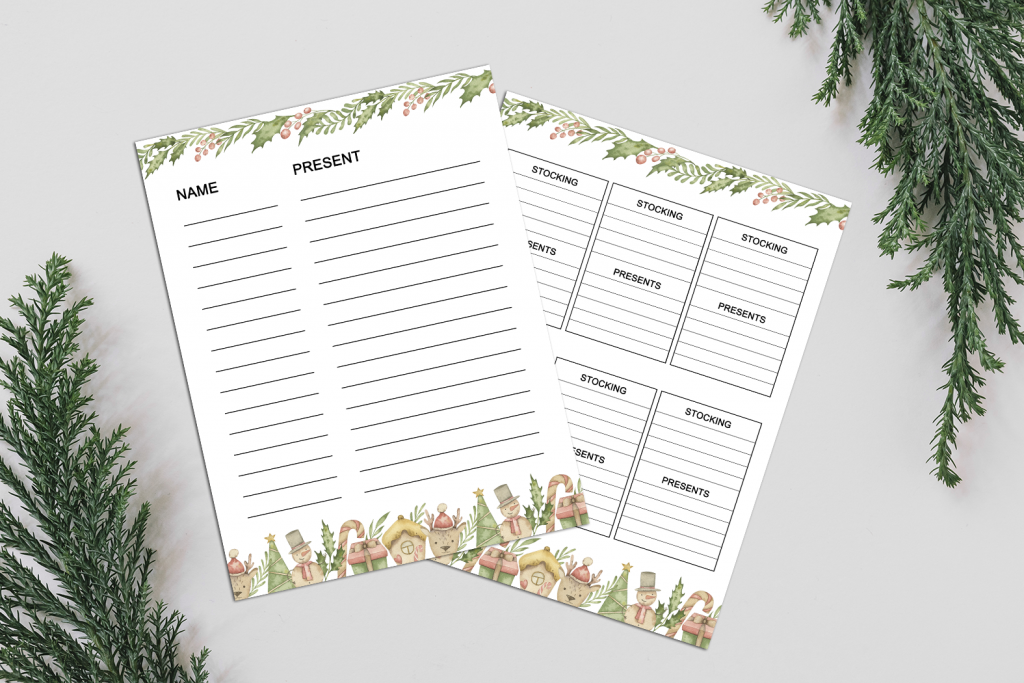
If you’re behind on your Christmas shopping — or just want a better system for next year — this simple gift list is exactly what you need.
What’s Included:
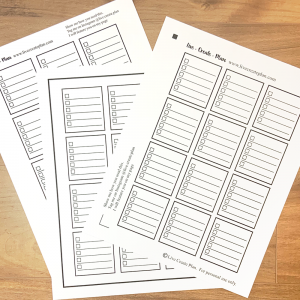
- A Christmas gift list to track names, gift ideas, budget, and purchase status
- A gift giving brain dump
You will receive both files shown in PDF form.
PRINTING GUIDELINES:
- Print at 100%.
- Use good quality bight white paper for best results.
RESOURCES:
 | Rock Paper Scissors Removable Sticker Sheets
|
 | Plain White Full Sheet Stickers
|
 | Cricut TrueControl Knife |
| **** above are affiliate Amazon links where I get a small percentage of the sale. Your price for the item will be the same and not increase. |